Language

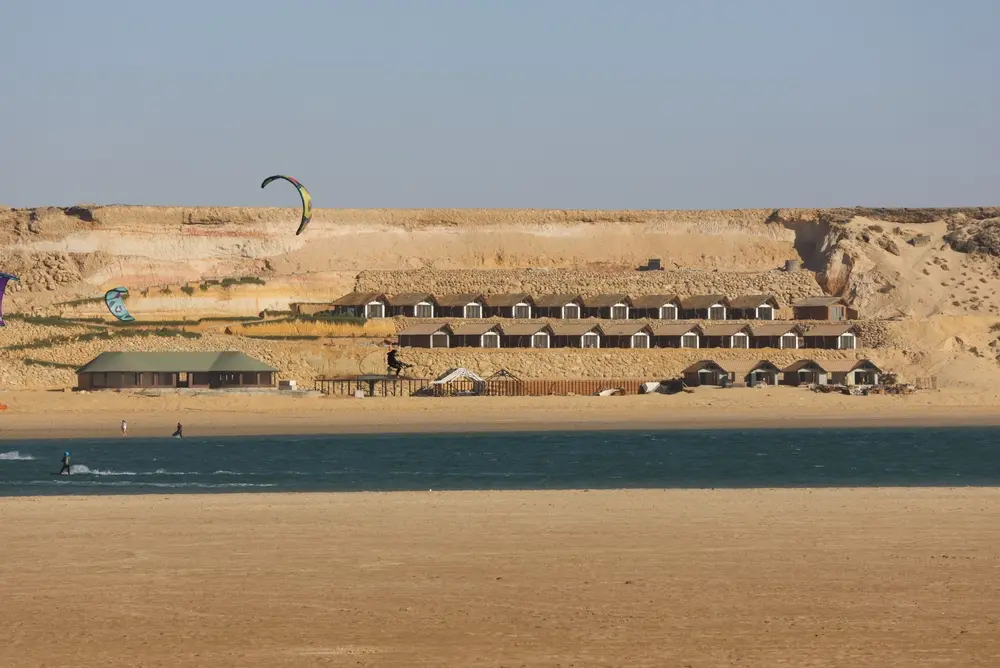
Where you sleep in Dakhla shapes your whole trip more than you'd expect. It decides how much time you actually spend on the water, how your evenings feel, and how much you pay for the privilege. And it really comes down to two options.
For most kitesurfers the choice is between a lagoon-side camp built around the water and riding, or a city hotel in Dakhla town with more comfort and quiet, but away from the kite spots. Camps put you right on the lagoon and in the thick of the scene; the best hotels give you space, amenities, and a proper night's sleep away from the wind.
I've stayed both ways across different trips, and honestly, neither is "better." They just suit different people and different trips. Here's how I'd think it through.
If your trip is about maximising time on the water, stay at a lagoon camp. If you want comfort, variety, and a base you can retreat to after a long session, stay in the city. Here's the short version:
| Feature | Lagoon camp | City hotel |
|---|---|---|
| Location | Right on the lagoon, ~30-40 min drive south of town | In Dakhla city |
| Best for | Kiters who want water time, the social scene | Non-kiters, families, comfort-seekers |
| Water access | Walk from your room to the launch | Day trips or transfers to the spots |
| Vibe | Social, kite-focused, all in one place | Quieter, more independent |
| Extras | Gear storage, lessons, often half-board | Restaurants, shops, more room types |
| Price feel | Package-based, varies by season | Often cheaper per night, but add transfers |
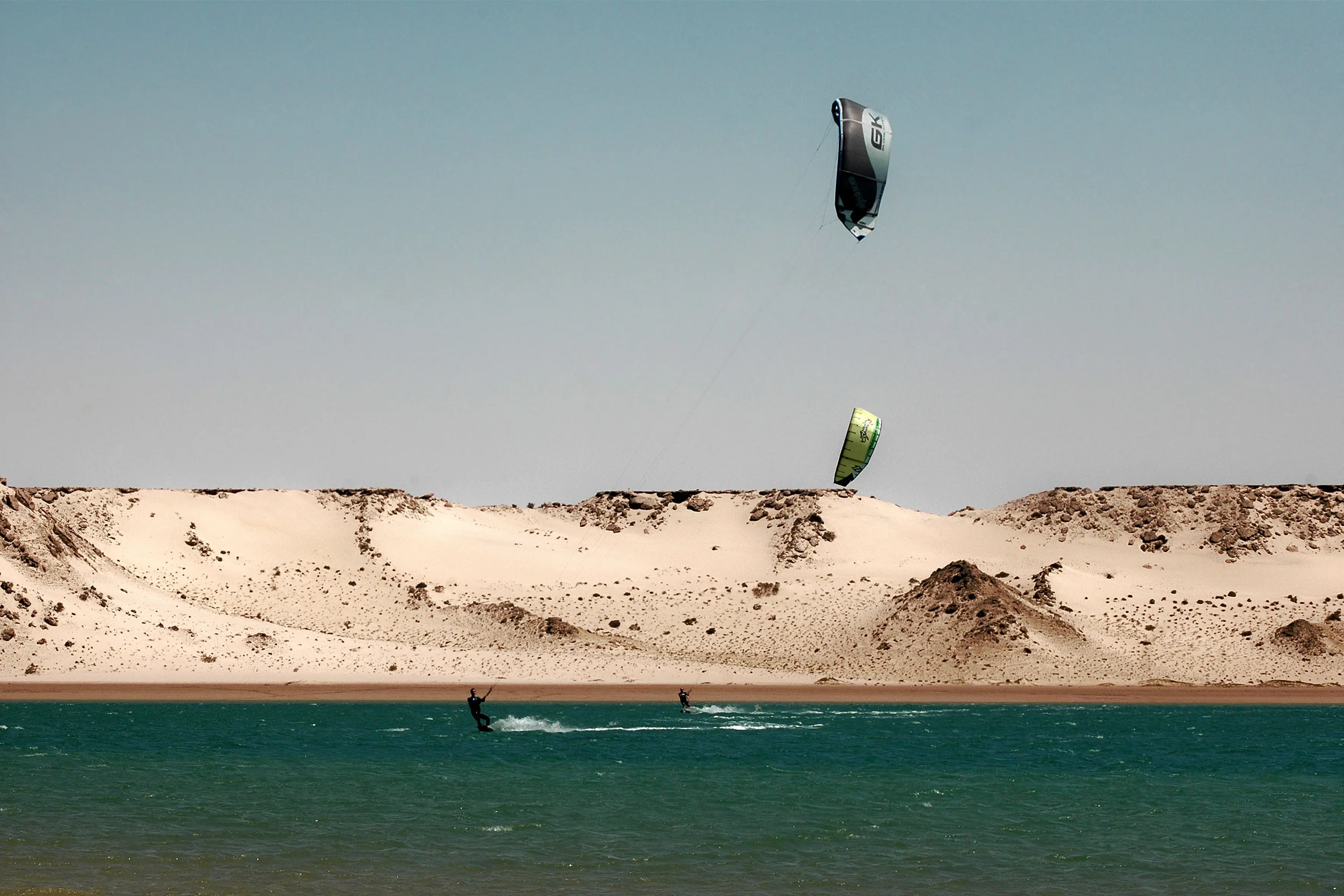
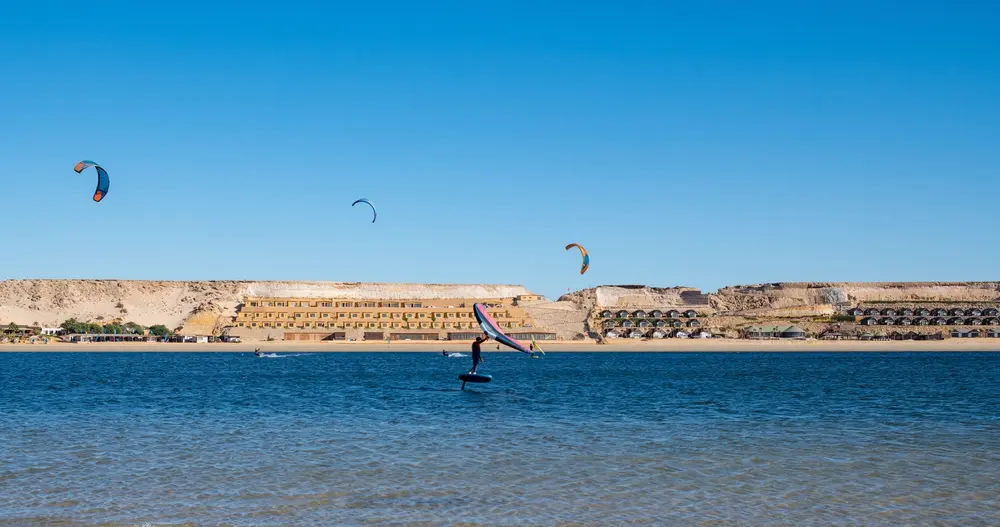
This is the classic Dakhla kitesurfing experience, and for good reason. The camps sit right on the lagoon, the heart of kitesurfing in Dakhla, each with its own private beach area. Your room, the gear store, the school, the restaurant, and the launch are all within a short walk of each other. You don't lose an hour of the day getting to the water. You just go!
Most camps run on packages built around riding: accommodation, meals (often half-board), gear storage, and lessons or rental bundled together. Places like PK25 and Dakhla Attitude are set up this way. Mirage is not one of them. We are a kitesurf school with no rooms to sell, so we teach wherever the wind is best on the day and meet you at whichever camp or hotel you have booked. That is also why this comparison can stay honest: we have nothing riding on which one you pick.
That all-in-one setup is genuinely convenient. One thing I always notice is how little planning the day takes. You rig up just a few steps from your room. When the wind drops, there's usually an outdoor swimming pool, a shared lounge, or a yoga session waiting.
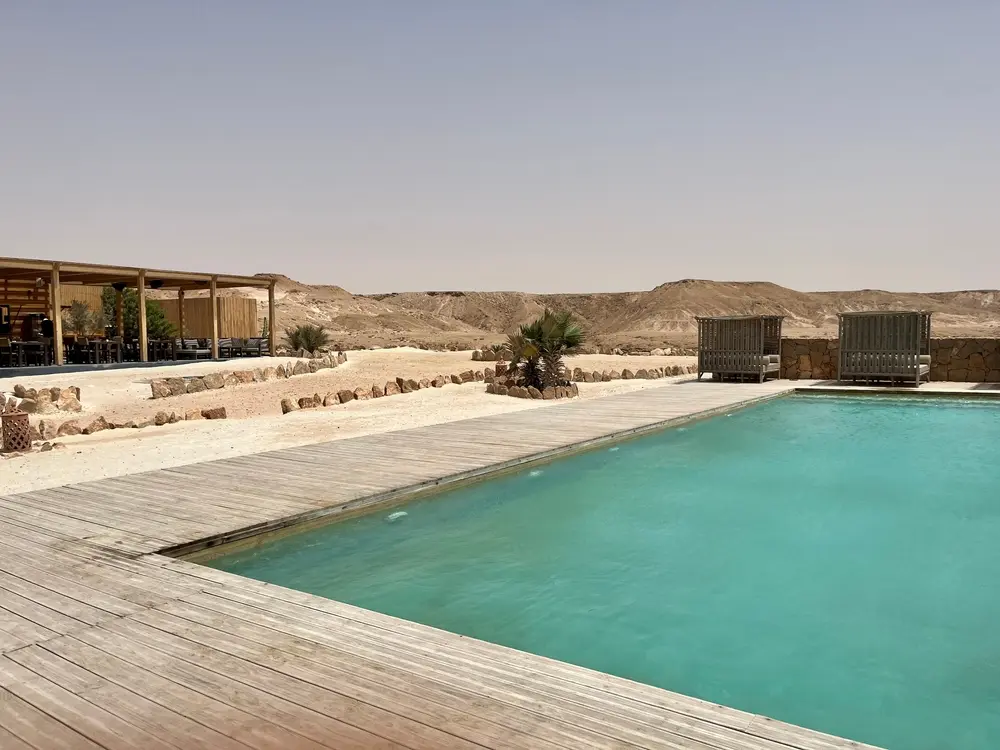
The other thing a camp gives you is people. There's a built-in social scene, which matters more than you'd think when you're travelling solo or learning. I've turned up to a camp not knowing a soul and left with a WhatsApp group and plans to meet up at the next destination.
Evenings are easy: dinner is sorted, everyone's swapping stories about their sessions, and you're all up early for the same reason. Even if you're naturally quiet, it's surprisingly easy to end up chatting while rinsing gear or waiting to see if the afternoon wind fills in again.
The trade-offs are real, though. Camps are out on the peninsula, roughly a 30-40 minute drive from Dakhla city, so you're a bit removed from restaurants, shops, and town life. Rooms tend to be simpler, and in peak season the popular camps fill up fast. I actually don't mind the quieter setting once I'm there, but if you like to explore the surrounding area after dinner, it can start to feel a little isolated after a while.
A lagoon camp suits you if you:
Dakhla town is a proper little city, and staying there is a different rhythm altogether. A hotel like Dakhla Club Hotel gives you more comfort and more space. It offers the kind of amenities the camps don't always provide, like room service, a spa, an on-site bar, and concierge service to help you plan. You'll have restaurants and cafés serving international cuisine within reach in the city centre, and a choice of room types from simple doubles to suites. The best Dakhla hotels, including its handful of more luxury hotels, are based here too.
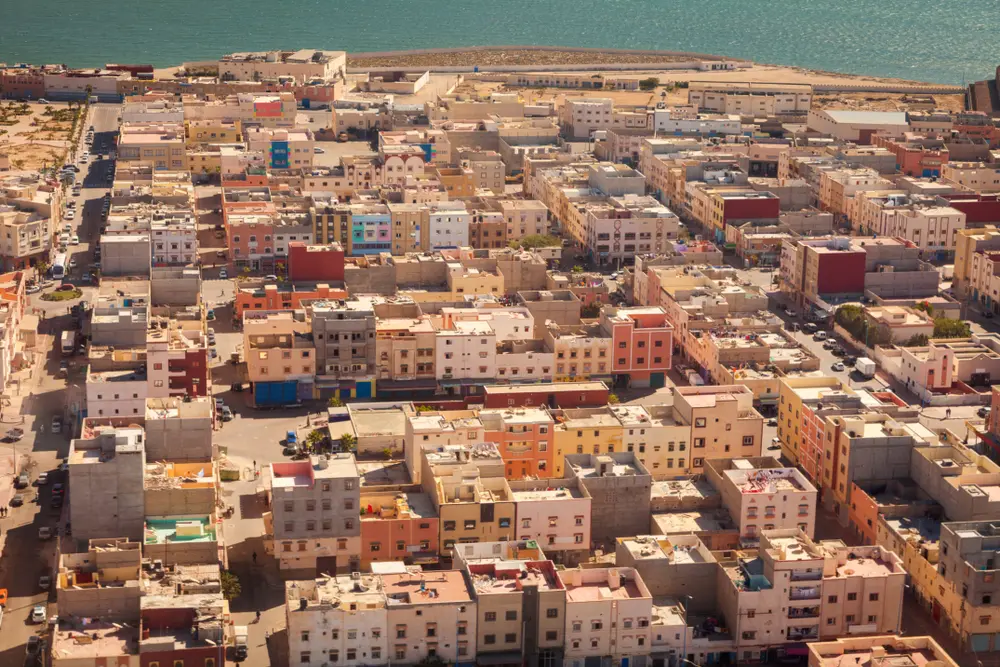
This is often the better call if you're travelling with a partner or family who aren't glued to the water, or if you simply want somewhere calm to retreat to at the end of a long, windy day. After spending full days on the lagoon, I always notice how different the evenings feel in town. Instead of everyone gathering around the kite centre, you can wander out for dinner, grab a coffee, or just enjoy a quieter atmosphere.
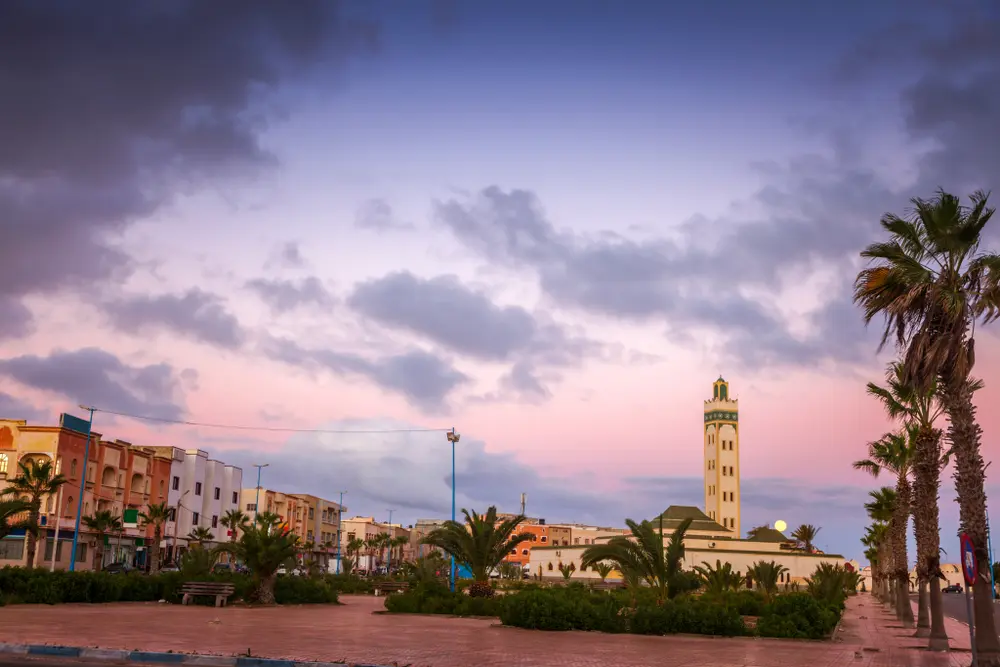
The town also puts you closer to Dakhla's non-kiting side, which is worth more than people expect. There's fresh seafood, local markets, and a base for desert trips and rest-day excursions when the wind isn't cooperating.
The catch is the water. From town you're not walking to the lagoon, so you'll either book day trips to the spots or arrange transfers. This eats into your riding time and adds a little cost. I found this mattered less on a mixed holiday than on a dedicated kite trip, but it does change the rhythm of your day.
Instead of checking the wind and heading straight to the beach, you're watching the clock to make sure you don't miss your ride. City hotels can look cheaper per night, but once you factor in getting to and from the water, the gap narrows. It's worth pricing out the whole trip instead of comparing room rates on their own.
A city hotel suits you if you:
For most riders, the honest answer is: lagoon camp for a dedicated kite trip, city hotel for a mixed holiday. It really is that simple most of the time. Whenever I've split a trip between riding and sightseeing, I've appreciated staying in town.
But when the goal is to get as much time on the water as possible, I never regret choosing the lagoon instead.
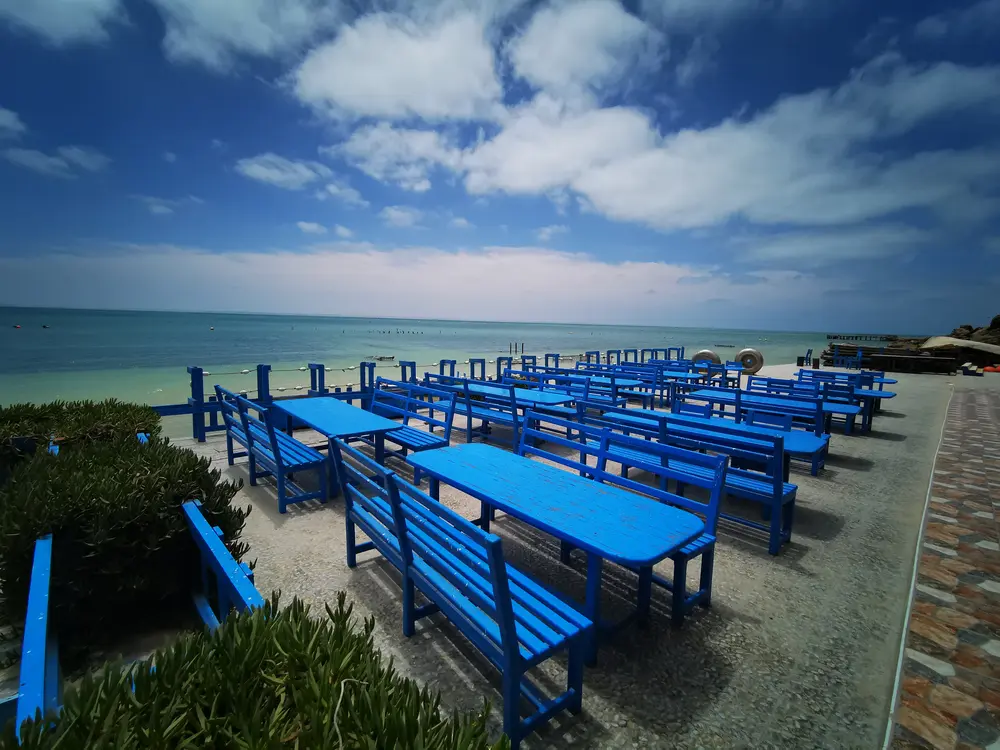
If the whole point is water time and you'll happily eat, sleep, and breathe kitesurfing for a week, the camp wins. If the trip is shared with people who don't kite, or you want more comfort and variety, the city is the smarter base.
A few situations tip the balance:
One more thing worth factoring in is the time of year. In peak season, June to September, the lagoon camps get busy and book out early, so reserve well ahead. I've been surprised by how quickly the most popular places fill once summer approaches. In the quieter shoulder and off-season months, you'll have more choice and better rates either way.
Whichever way you lean, a few practical questions save headaches later:
Running through these questions before you book usually clears up the small surprises that can affect how comfortable the rest of your trip is.
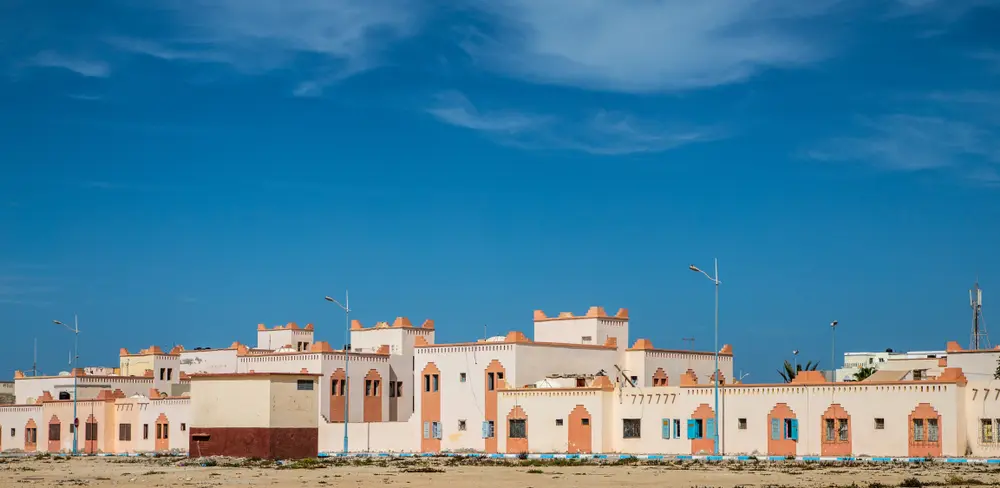
If you're here to ride and progress, I'd pick a lagoon camp every time. Waking up on the water, rigging up steps from your room, and having a ready-made crew for the evenings is hard to beat, especially when every windy hour counts. But if you're bringing family, want your comforts, or you're building a trip around more than just the wind, the city gives you room to breathe.
I've enjoyed trips both ways, and that's probably why I don't think there's one right answer. It really comes down to what you want the trip to feel like once you're off the water.
Have questions about where to stay for your trip? Get in touch with us, and we'd love to help you plan it.